Why Traditional Wine Education is Failing Your Palate
 Isabelle Lesschaeve
How to level up your tasting skills with structured sensory training
Cultural Shock
When I moved to the United States from France 30 years ago, I was shocked by one particular cultural difference: people were taking certification classes just to learn how to talk about and enjoy wine.
Growing up in a wine culture, I found it puzzling that wine appreciation was being framed as a technical, expert skill rather than a joyful sensory discovery.
Watch the video instead
This video was produced by Google Notebook LM based on the class I delivered on July 15, 2026 in The Curious Palates community.
Accepting the Disconnect
Over the years, working as a sensory and consumer scientist, I watched eager wine students enroll in prestigious programs like the WSET or the Court of Sommeliers, only to feel overwhelmed and insecure.
Traditional wine education assumes you already know how to taste. Instructors guide you through looking, smelling, and tasting, and then ask you to memorize long tasting grids. They ask you to identify notes like "cassis," "red currants," or British "pear drops," assuming you actually know what those smell like.
Instead of relying on their own perceptions, students are taught to search for expected descriptors in the wine and and check boxes on their tasting grid. This approach doesn’t build your sensory skills; it builds a vocabulary based on memorization and deduction. No wonder so many wine lovers come to me believing they have a "weak nose," second-guessing their every perception.
But here’s the truth: you do not have a weak nose; you have an untrained nose. There is no right or wrong answer in sensory tasting, and your perceptions are always right because they are your own.
Redefining Tasting Mastery
In traditional wine education, becoming a "master taster" often means being able to blind taste a wine, logically argue its identity, deduce its past facts, predict its future, and even guess the winemaker's intent. This creates a technical expert, but it is incredibly intimidating for the everyday wine lover.
Through the lens of sensory science, tasting mastery—or rather, tasting performance—looks very different. It is not about deducing a wine's past; it is about describing with precision exactly what you are perceiving, picking up flavor nuances, and doing so consistently. If I give you the same wine two days in a row, a performing taster should be able to describe it similarly both times.
Sensory tasting is a bottom-up approach. We let the wine speak rather than hunting for expected aromas on a predefined grid.
The 5 Levels of Tasting Mastery
After coaching hundreds of professionals and enthusiasts over my career, I’ve observed that we all move through a specific pathway to proficiency.
Where do you fall on this journey?
6a61945f6e549_lg.jpg)
Level 1: The Wine Explorer
We all start here. You are curious about wine, you explore casually by attending events or visiting wineries, and you ask your local wine store for recommendations. However, you feel intimidated by the categories, regions, and mysterious wine lingo.
Level 2: The Wine Student
Determined to learn, you enroll in classes like WSET Level 1 or 2. While you are excited by your new textbook knowledge, you quickly become overwhelmed by the rules. You remain hesitant with your tasting notes, unsure of what you actually smell and taste.
Level 3: Sensory Awakening
This is the pivot point. You realize that despite your knowledge, tasting remains difficult. You begin to pursue tasting education, perhaps by buying aroma kits or joining a community to awaken your senses. Still, you lack a structured routine, worry you might be doing something wrong, and struggle to practice consistently.
Level 4: Sensory Confident
At this stage, you commit to intentional, mindful smelling and tasting. You might work with a tasting coach or follow a structured program. The biggest shift? Relief. You realize you can taste, and you are encouraged by your progress. You finally start connecting your perceptions with your textbook wine knowledge, and you share your tasting notes much more easily.
Level 5: The Proficient Taster
While no one is a perfect taster every day, at this level, you have built an expanded sensory repertoire and a robust sensory memory bank. You describe wines with precision and relate your perceptions directly to the technical features of the wine. Most importantly, you stop second-guessing yourself. You speak about wine confidently, using plain, approachable language—not arrogant, expert jargon.
How to Level Up: Breaking the Plateau
If you are stuck at Level 2 or 3, a self-guided journey will only get you so far. Randomly smelling things in your kitchen won't create lasting change. Like any new skill, you will eventually hit a plateau without a feedback loop.
To truly progress, you must adopt structured sensory training. This means dedicating just 15 to 20 minutes a day to intentional practice.
The core principles of a performing taster are simple but rigorous: you must focus, calibrate, and repeat. By learning three to six descriptors a week, validating your perceptions, and minimizing distractions, you build a sensory memory that lasts.
The Decision is Yours
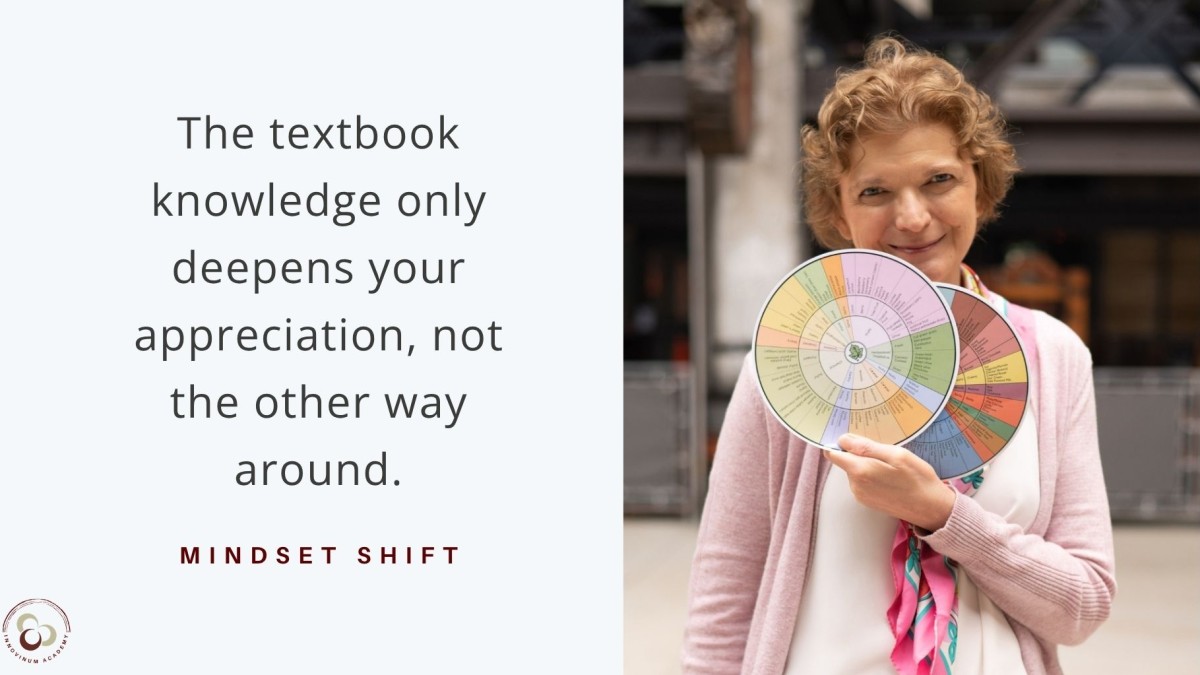
You don't need a certification to enjoy wine, but training your senses is the missing piece that deepens your appreciation.
When you learn how to use your senses first, your textbook knowledge finally has a sturdy foundation to stand on.
So, I invite you to take a moment and reflect:
What level of tasting mastery do you aspire to reach?
👉 If you want to stop doubting yourself and finally unlock your palate,
come join us in the free Curious Palates community on Skool.
👉 If you are ready to fast-track your progress with highly curated, one-on-one coaching,
I am currently accepting applications for the Wine Tasting Confidence Accelerator.
Listen to your nose.
Be mindful.
Let the wine speak and enjoy.
Categories: : Tasting education
Download your Free Resources

Unlock your senses | The Sensory Approach to Wine Tasting
Templates, audio guide to carry out a sensory training
Join Curious Palates, a FREE Community and open training space to develop your wine palate with sensory training

Isabelle Lesschaeve, PhD
Blog author, Wine Sensory Scientist and Wine Tasting Coach
Internationally renowned wine sensory scientist, Isabelle demystifies wine tasting and helps serious wine lovers improve their senses of smell and taste to sharpen their tasting skills and tasting notes.
InnoVinum LLC is a participant in the Amazon Services LLC Associates Program, an affiliate advertising program designed to provide means for sites to earn advertising fees through advertising and linking to amazon.com.