A Sensory Dive into Petit Manseng
 Isabelle Lesschaeve
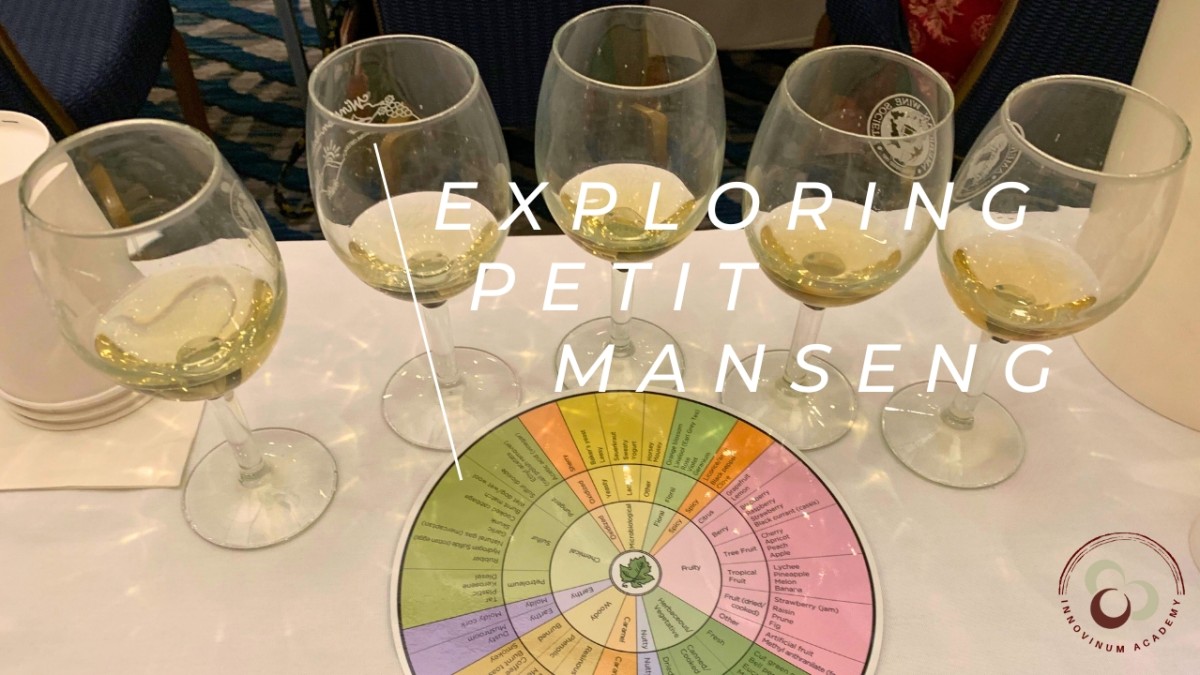
Discover the versatility and uniqueness of the Petit Manseng grape and its wines.
The Ultimate Balancing Act: A Sensory Dive into Petit Manseng
I still remember the first time I encountered Petit Manseng. A colleague, with family roots in the Southwest of France, had brought a white wine from Jurançon to pair with a foie gras appetizer.
I can recall the smooth, sweet, late-harvest wine expressing complex stonefruit and tropical flavors. At the time, I assumed that this rich, intense style was regionally specific and one-of-a-kind.
Imagine my surprise when I learned that Virginia embraced this varietal in the 1980s, now holding the title of the second-largest global producer.
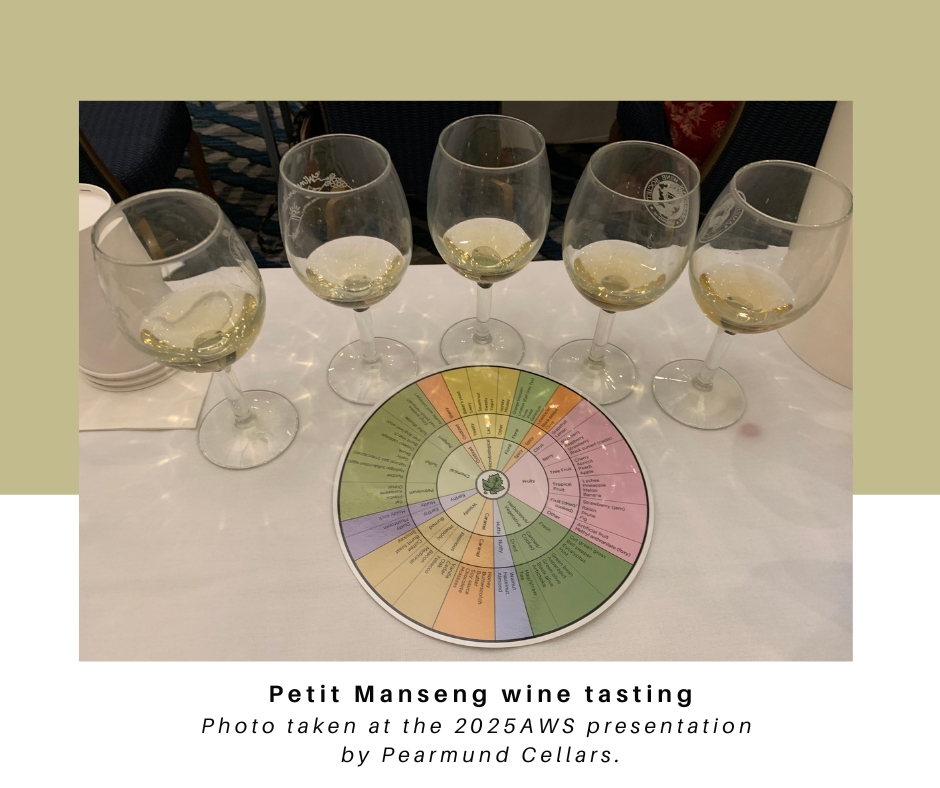
I discovered the grape versatility during a tasting at an American Wine Society conference, held in Chantilly, VA.
Petit Manseng immediately piqued my interest.
How can one grape produce such diverse wine styles, yet keep its signature aromas?
As sensory scientists, we like to understand the 'why' behind the 'what' we perceive while sniffing and tasting.
Today, let’s explore this lesser-known grape variety and connect the dots between the vineyard, the cellar, and the glass.
Petit Manseng in the Vineyard
Petit Manseng is a remarkable grape because it defies the conventional rules of ripening.
Originating from the South West of France (Jurançon), the grape thrives in conditions that challenge many other white varieties.
It has small berries protected by thick skins. This structure gives it high resistance to diseases and rot, especially useful in regions like Virginia, which experience high humidity and frequent rainfall.
Petit Manseng achieves exceptionally high sugar concentrations while simultaneously preserving high natural acidity. While many grapes lose acid as they ripen, Petit Manseng holds onto it, even with extended hang time on the vine. This allows winemakers to achieve full phenolic ripeness and flavor concentration without ending up with flabby, dull wines.
The thick skins also allow the fruit to shrivel and dry naturally on the vine (a process called passerillage), concentrating the sugars for dessert wines without relying on the beneficial Botrytis infection (noble rot).
Taming the Tartness
The primary challenge for winemakers working with Petit Manseng is managing this intense natural acidity, which can easily lead to wines that are high in alcohol and pronouncedly tart.
Winemakers typically avoid Malolactic Fermentation (MLF), which is often used to soften acidity in other white wines.
Instead, they employ different techniques to achieve balance:
Sweet Aromatic Perception: Winemakers sometimes work with specific yeasts to generate sweet aromatics or glycerol. This process is a sensory trick: these compounds trick our brains into perceiving a balanced sweetness-acidity ratio, even if the wine is technically dry or has low residual sugar.
Oak Settling: Neutral oak barrels may be used for aging to allow the sharp acidity to settle and integrate, adding secondary notes of almond or caramel.
Petit Manseng Sensory Profile
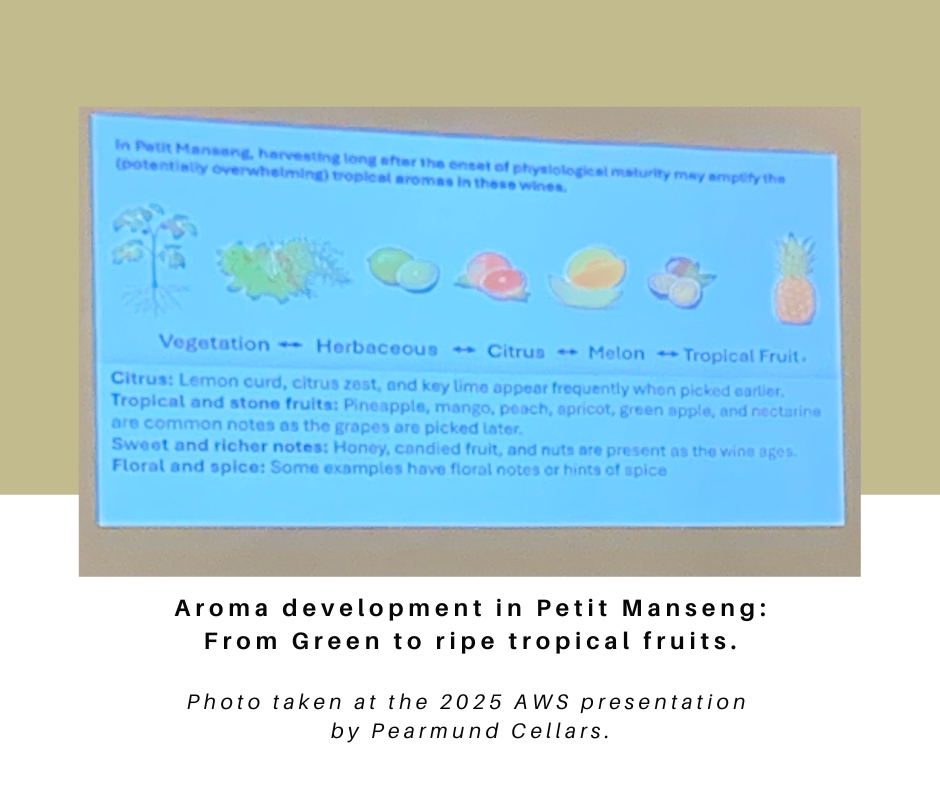
Whether dry or sweet, Petit Manseng delivers a complex sensory profile. The link between the high acidity and the resulting aromatic profile is key to understanding this grape.
1. Dry Petit Manseng
If you pick up a dry style, expect a refreshing mouthfeel and bright aromas.
Aromatics: Notes of pineapple, guava, melon, apricot, and citrus zest are common.
Texture: The wines I tasted were medium to full-bodied, a perception created by the aromatic intensity and high alcohol content, most were above 14% alc.
2. Off-dry Petit Manseng
The high-acid structure is what gives late-harvest and dessert styles their extraordinary lift, ensuring they are never cloying. The tasting reminded me of icewines, where the wines are overly sweet, but the high acidity alleviates the cloying perception into a pleasant one.
This makes off-dry Petit Manseng age-worthy, with the acidity acting as a natural preservative.
Aromatics: Look for honey, dried fig and apricot, candied citrus, and ripe tropical fruit.
Texture: These wines are silky and smooth.
Explore with your senses
Petit Manseng offers a rewarding challenge for sensory discoveries. It forces you to rethink the relationship between ripeness, acidity, and perceived sweetness.
Whether you’re in the mood for an unoaked, mouthwatering, and fruitful white wine or are tempted by an off-dry and smooth style, I invite you to explore this lesser-known varietal wine.
Test food pairings as you see fit. As you may know, my take on food and wine pairing is about YOUR preference, not mine. Check this article to read my point of view.
Here’s the link to Pearmund Cellars, which was hosting the tasting I attended.
Categories: : wine style
Download your Free Resources

Unlock your senses | The Sensory Approach to Wine Tasting
Templates, audio guide to carry out a sensory training
Join Curious Palates, a FREE Community and open training space to develop your wine palate with sensory training

Isabelle Lesschaeve, PhD
Blog author, Wine Sensory Scientist and Wine Tasting Coach
Internationally renowned wine sensory scientist, Isabelle demystifies wine tasting and helps serious wine lovers improve their senses of smell and taste to sharpen their tasting skills and tasting notes.
InnoVinum LLC is a participant in the Amazon Services LLC Associates Program, an affiliate advertising program designed to provide means for sites to earn advertising fees through advertising and linking to amazon.com.