Food and Wine Pairing: Why There Is No Perfect Match
 Isabelle Lesschaeve

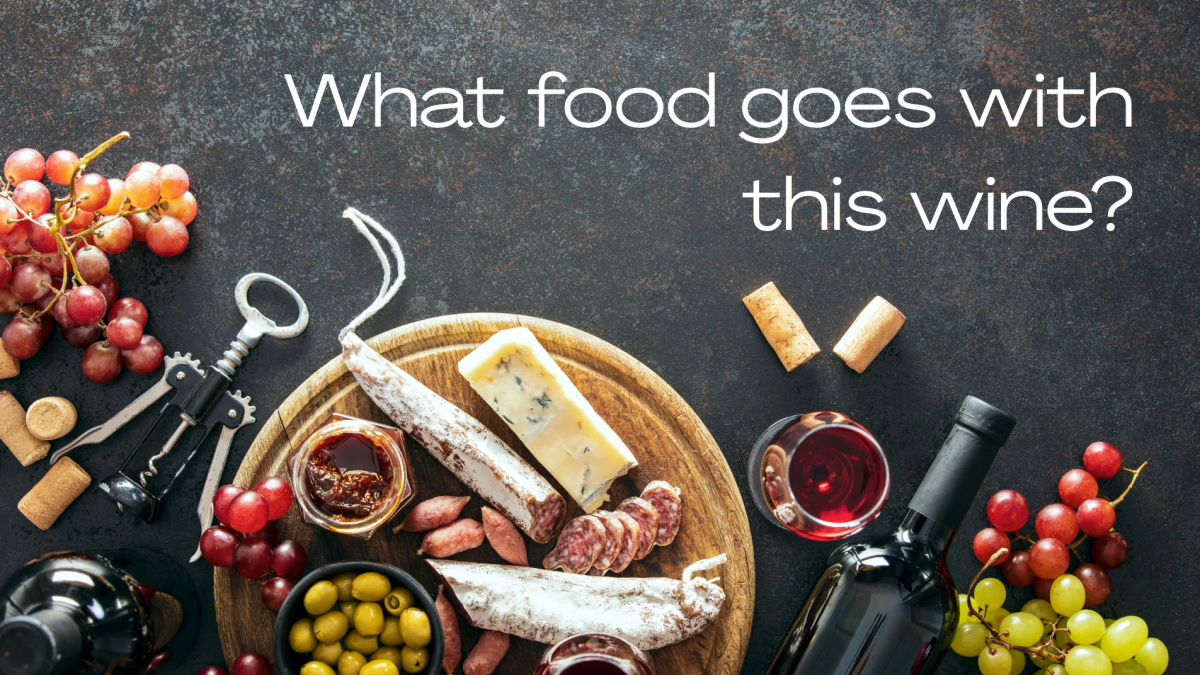
Is there a perfect food and wine pairing? A sensory scientist and a sommelier tested Riesling and Pinot Noir with four foods. Here's what science says.
"What food goes with this wine?"
As a sensory scientist, I get this question all the time. My honest answer is usually: it depends on what you like.
Not very satisfying, I know. Especially if you are preparing for WSET Level 3, the Diploma, or a sommelier exam, where food and wine pairing is tested as if there were one right answer.
So I put it to the test. On November 11, I co-hosted a food and wine pairing workshop with certified sommelier Kendeigh Worden of The Grape Grind. Two wines, four foods, and tasters from California, the UK, France, Germany, Italy, and Romania.
We had lively discussions and different conclusions on what a perfect match was.
Those different point of views turned out to be the most useful result of the evening. Here is what happened, and what the research says about why there is no perfect pairing.
Two wines, four foods, one split room
The setup was simple on purpose. Each taster brought a Riesling (off-dry suggested) and a Pinot Noir, plus fresh goat cheese, cheddar, plain salted potato chips, and dark chocolate.
We first tasted both wines alone to set a baseline. Then we took a bite of food, followed by a sip of wine, and noted what changed in the wine, in the food, and in our liking.
Here is a summary of what the room reported.
Pairing | What tasters noticed | Room verdict |
|---|---|---|
Riesling + goat cheese | The cheese softened the acidity and let the citrus fruit through. With an off-dry Riesling, the sweetness almost made the cheese disappear. | Mostly positive, though one taster preferred a dry Riesling |
Riesling + cheddar | The Riesling's sweetness, then almost the whole wine, faded. "No unpleasant flavor, but almost all the flavor is gone." | Disappointing rather than bad |
Riesling + chips | For one participant, the wine suddenly felt bigger, riper, and fuller. For others, it was their least favorite. | Split down the middle |
Pinot Noir + goat cheese | The jammy fruit vanished. Tannin, acidity, and a bitter aftertaste took over. | The least liked pairing |
Pinot Noir + cheddar | Earthy, mushroom notes were amplified. Some noticed a metallic note. | Mixed to positive |
Pinot Noir + chips | Fruit and structure were lifted, and astringency became more noticeable. | A surprise favorite for some |
Riesling + dark chocolate | "Almost like oil and water": the wine rinsed the palate but the flavors never married. | Two tasters loved it, others passed |
Pinot Noir + dark chocolate | Too bitter for most. As a bitterness lover, I enjoyed it. | Mostly negative |
And remember, nobody was tasting the same products... on purpose. The goal wasn't to reach consensus, but to allow each participant to experience the different pairings.
Three outcomes we keep confusing
When we say a pairing "works," we usually mean one of three different things. As a sensory scientist, I tend to keep them apart, and I recommend you do too.
A sensory change. The food measurably changes how the wine tastes, or the reverse. Sweetness drops, astringency builds, fruit fades.
Appropriateness or harmony. The two seem to belong together, in that setting, for that occasion.
Liking. You actually enjoy the combination.
These can move together, but they are not the same thing (Spence, 2020a).
The research shows it clearly.
- In a French study, 31 frequent wine and cheese consumers tasted four wines over repeated sips, with and without cheese.
The cheese changed how the wine's sensations unfolded over time, and for some wines it changed preference too (Galmarini et al., 2016).
When the same team reversed the question, wine changed how the cheese was perceived, but it did not make people like the cheese any more (Galmarini et al., 2017).
- In an Australian study, 108 consumers rated Shiraz paired with three dishes.
A slight wine dominance in the pairing was found compatible with higher liking scores, so equal intensity of the paired products was not required for a successful match.
Even more surprising, the foods alone were liked more than their pairings (Kustos et al., 2020).
A pairing can change the wine a lot and still leave you indifferent.
That is exactly what our cheddar and Riesling showed. A big sensory change, no unpleasant flavor, and very little pleasure.
Why the same pairing splits a room
If Riesling and chips can be one person's favorite and another's least favorite, something other than the "rule" is driving the result.
At least four things were at play.
The products. Residual sugar, acidity, tannin, and alcohol vary widely within one grape variety, and taste interactions depend on concentration (Keast & Breslin, 2003).
An off-dry Riesling and a bone-dry one will not react to salt or fat the same way. Kustos et al. (2020) also found differences between two wines of the same variety.
The order. Food then wine is not the same experience as wine then food, or both in the mouth together. Residual fat, salt, and aftertaste carry over from one bite or sip to the next. As one participant pointed out, in a real meal it is impossible to keep the two separate: a long wine lingers, and so does the food.
The taster. We differ in our sensitivity to tastes like bitterness, mouthfeels like astringency, and flavors, and, even more, in what we enjoy.
One person described herself as a "less salt person," and the potato chip pairings did nothing for her.
I love bitterness, so the Pinot Noir with dark chocolate worked for me. Consumer studies regularly find groups of people who prefer different pairings (Kustos et al., 2020).
The context. It was 1 PM for some of us and 10 PM for others. What you ate or drank earlier, palate fatigue, and even expectations shape what you perceive (Spence, 2020b).
The rule you may have learned from textbooks is a starting hypothesis. Your sensory experience delivers the verdict.
What this means for your tasting practice
If you are studying for WSET Level 3, the Diploma, or a sommelier certification, pairing questions reward reasoning, not memorized matches.
WSET itself frames pairing around food and wine components: sweetness, acidity, salt, umami, bitterness, chili heat, fat, and flavor intensity on one side; sweetness, acidity, tannin, alcohol, and fruit on the other (WSET, n.d.).
Kendeigh put it well: the sommelier "rules" are better called baselines. Reference points. Take what works and leave the rest.
On the restaurant floor, her starting point was never the rule. It was the guest: what do you like?
So use the rules the way a scientist uses a hypothesis:
Predict. Based on the wine's structure and the dish, what do you expect to change?
Test. Taste the wine alone, then with the food, in a defined order.
Describe precisely. Not "it worked," but "the cheddar suppressed the Riesling's sweetness and fruit, and shortened the finish."
Judge separately. Did it change? Did it belong? Did you enjoy it?
Step 3 is where most tasters get stuck.
You sense something shift in the glass, then second-guess it, or reach for a vague word. Being able to name precisely what you perceive is the skill that makes pairing analysis, and every exam tasting, so much easier.
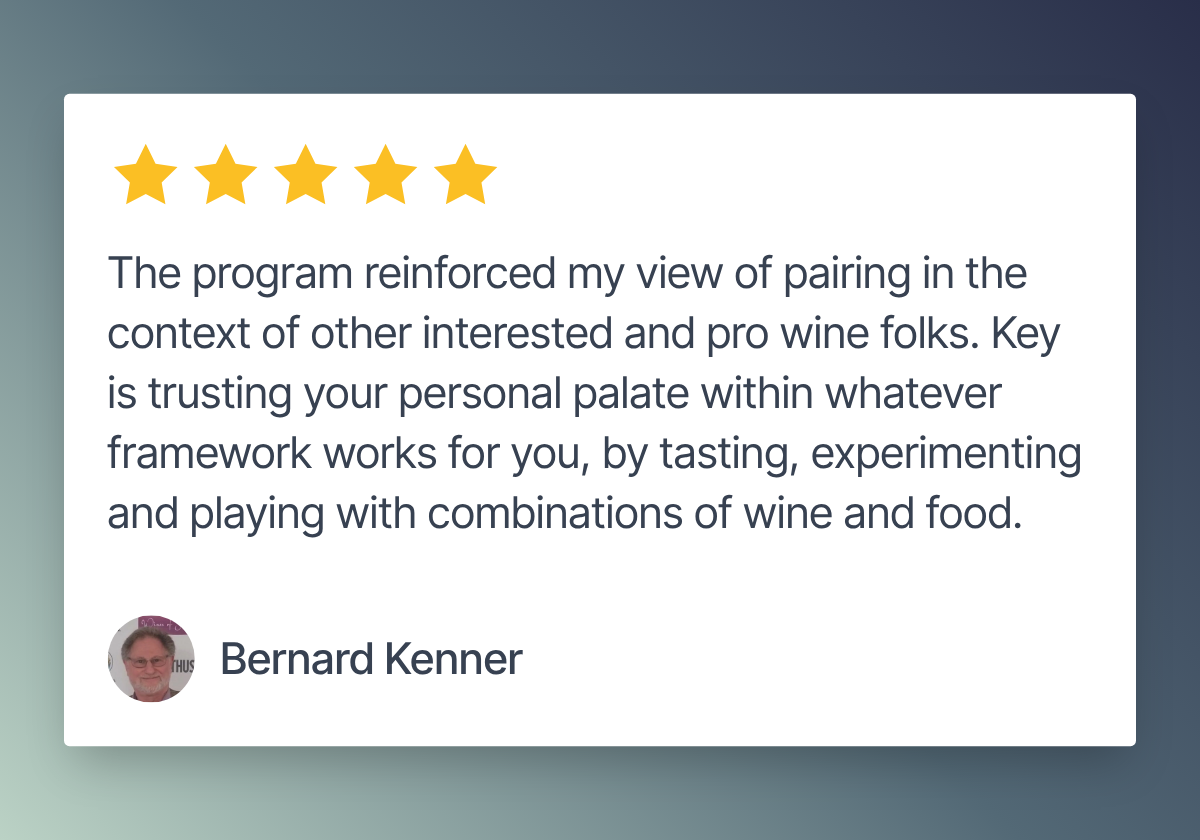
One participant summed up the evening this way:
Key takeaways
There is no scientifically objective perfect pairing, only pairings that work for a given wine, food, person, and moment.
A sensory change, a sense of harmony, and actual enjoyment are three different outcomes. Evaluate them separately.
Tasting order and flavor carryover change the verdict, so define your protocol before you taste.
Sommelier rules are useful baselines. Treat them as hypotheses to test with your own palate.
Precise descriptions of what changed turn a pairing into a learning experience.
Coming next in this series:
Sommelier pairing rules under the microscope: what the science supports, and what it doesn't
Salt, sugar, acid, fat, and bitterness: the taste interactions behind every pairing
Bite, sip, repeat: why tasting order changes your verdict
Design a pairing tasting like a sensory scientist
P.S. Want to taste along at our next live session? Join Curious Palates, my free community for serious wine students, where there are no right or wrong answers.
References
Galmarini, M. V., Loiseau, A.-L., Visalli, M., & Schlich, P. (2016). Use of multi-intake temporal dominance of sensations (TDS) to evaluate the influence of cheese on wine perception. Journal of Food Science, 81(10), S2566–S2577. https://doi.org/10.1111/1750-3841.13500
Galmarini, M. V., Loiseau, A.-L., Debreyer, D., Visalli, M., & Schlich, P. (2017). Use of multi-intake temporal dominance of sensations (TDS) to evaluate the influence of wine on cheese perception. Journal of Food Science, 82(11), 2669–2678. https://doi.org/10.1111/1750-3841.13932
Keast, R. S. J., & Breslin, P. A. S. (2003). An overview of binary taste–taste interactions. Food Quality and Preference, 14(2), 111–124. https://doi.org/10.1016/S0950-3293(02)00110-6
Kustos, M., Heymann, H., Jeffery, D. W., Goodman, S., & Bastian, S. E. P. (2020). Intertwined: What makes food and wine pairings appropriate? Food Research International, 136, 109463. https://doi.org/10.1016/j.foodres.2020.109463
Spence, C. (2020a). Food and beverage flavour pairing: A critical review of the literature. Food Research International, 133, 109124. https://doi.org/10.1016/j.foodres.2020.109124
Spence, C. (2020b). Wine psychology: Basic & applied. Cognitive Research: Principles and Implications, 5, Article 22. https://doi.org/10.1186/s41235-020-00225-6
Wine & Spirit Education Trust. (n.d.). Four rules for food and wine pairing. WSET Global
Categories: : Tasting education
Develop your wine palate
Wine Students: Book a Sensory Training Audit and define an effective training roadmap.
Just started discovering wine?
Join Curious Palates, a free online community to unlock your senses, stop guessing and start sensing what's in your glass.

Isabelle Lesschaeve, PhD
Author, Speaker, Wine Sensory Scientist and Tasting Coach
Dr. Isabelle Lesschaeve, a seasoned sensory professional in the beverage industry (ex-Gallo, ex-Coke), founded InnoVinum Academy to champion sensory science education within the wine industry.
She helps wine certification candidates and professionals develop their tasting skills through sensory training, building confidence and precision in their wine descriptions.
Isabelle holds a Ph.D. in Food Science, specializing in Sensory and Consumer Science, from the University of Burgundy, France. She has authored over 50 peer-reviewed publications and delivered keynotes at international wine conferences.
InnoVinum LLC is a participant in the Amazon Services LLC Associates Program, an affiliate advertising program designed to provide means for sites to earn advertising fees through advertising and linking to amazon.com.