Connecting Sensory Perception and Wine Knowledge for Sauvignon Blanc
 Isabelle Lesschaeve
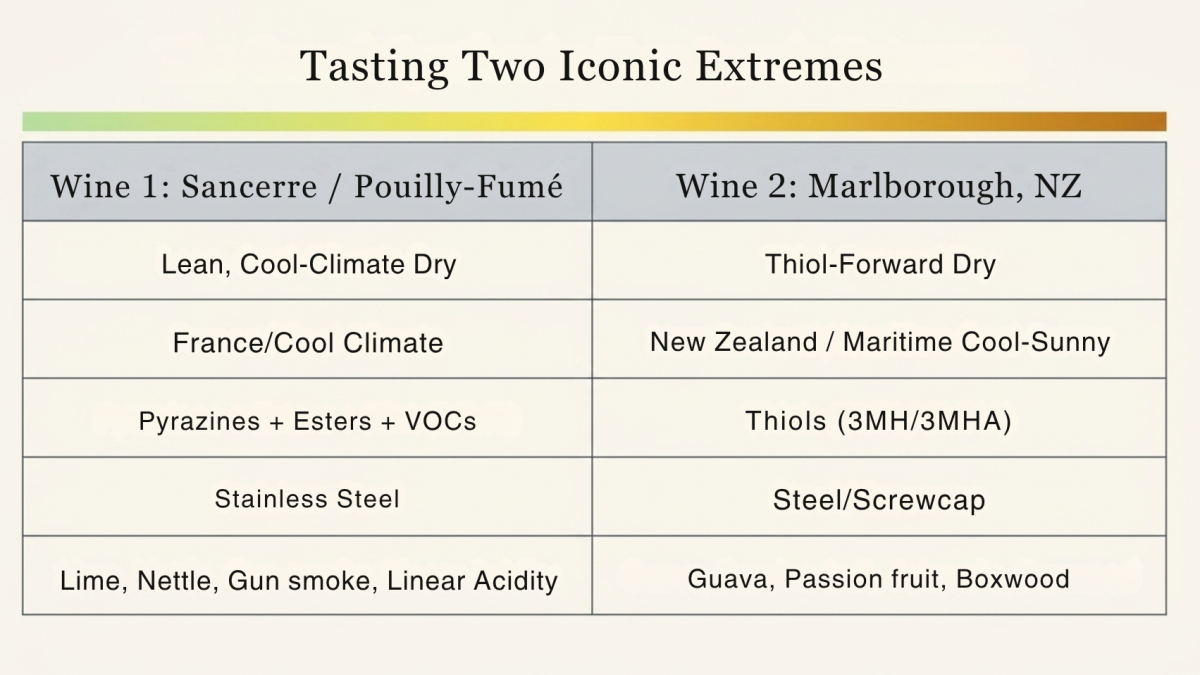
Connect your Sauvignon Blanc tasting notes with your wine knowledge to practice for your next tasting challenge.
For wine students enrolled in certification programs like WSET or CMS, blind tasting can feel like a guessing game.
Tasting mastery lies in connecting direct sensory perceptions with underlying enological knowledge.
Understanding why a wine smells of boxwood or tastes of puckering lime transforms blind tasting from a roll of the dice into a logical interpretation of the sensory experience.
This article guides you through a sensory tasting protocol to interpret your perceptions with wine knowledge, in this case, the factors impacting Sauvignon Blanc flavors.
We used a recent tasting session hosted in the Curious Palates community, where InnoVinum Academy's tasting coach, Dr. Isabelle Lesschaeve, and several wine enthusiasts explored this exact intersection.
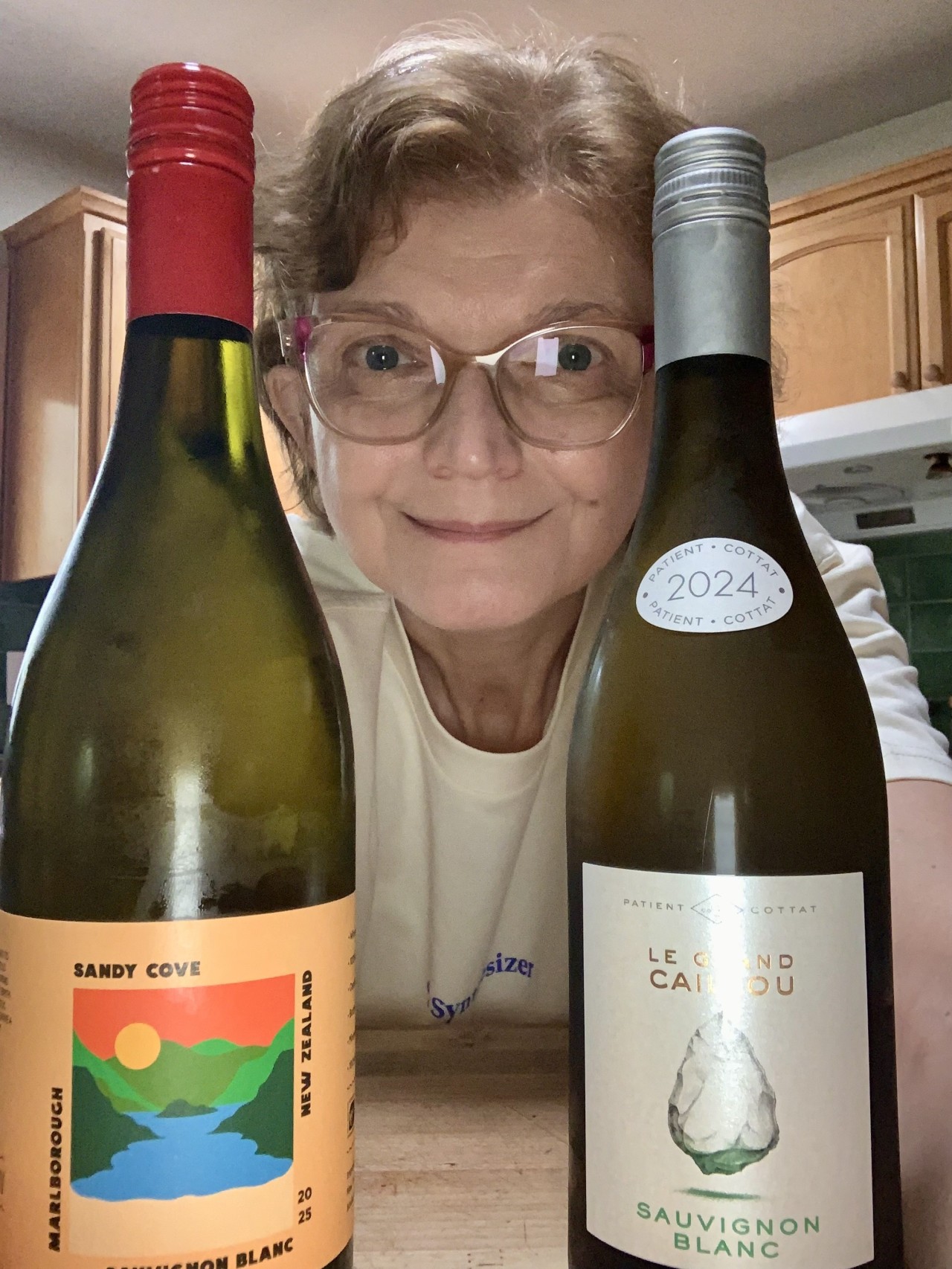
During this session, the participants tasted two contrasting wine styles: a Sauvignon Blanc from the Loire Valley (France) and a Sauvignon Blanc from the Marlborough region (New Zealand).
The Pre-Tasting Protocol: Mitigating Cognitive Bias
Technical tasting requires minimizing cognitive bias. Establishing habits that isolate your senses and help you focus is essential for a more objective wine analysis.
Delay the Visual Evaluation
In traditional grids, visual analysis is first. However, evaluating appearance first is a trap.
Deep gold primes you to expect oak-derived vanilla; water-white primes you for green grass
The Technique: Evaluate color only after completing your olfactory assessment.
Since visual appearance remains stable, delaying this step protects your nose from visual priming.
Watch this video for more insights on visual biases.
<< Stop Looking at Wine Appearance First | Wine Tasting Mistake >>
Embrace Comparative Tasting
Biologically, the human brain is wired to compare and contrast.
That’s why a comparative tasting is easier to perform so that you can identify differences between two stimuli, instead of trying to retrieve abstract benchmarks from memory.
The Technique: Taste two contrasting wines, such as a Loire Valley Sauvignon Blanc (e.g. Sancerre) and a Marlborough wine side-by-side.
This comparison acts as an amplifier, making structural and aromatic differences instantly obvious.
The Cover-and-Concentrate Method
If you struggle to identify wine aromas, use this technique.
Pour about one-third of the glass and cover it with a paper lid (AMZ link) or paper foil for one full minute before smelling.
This traps and concentrates the highly volatile compounds in the headspace, making them far easier to detect when you uncover the glass and release them.
Smelling Protocols: The Two-Step Sniff and Sensory Reset
Once your headspace is concentrated, approach the glass with a two-stage smelling technique designed to isolate compounds by aroma volatility.
Step 1: The First Sniff (No Swirl): Uncover the glass and take a gentle sniff without swirling.
This captures the lightest, highly volatile compounds that have gathered in the headspace.
This is where you pick up fresh yeast-derived esters—such as green apple, pear, and banana—or delicate tropical thiol notes.
You might also pick up some sulfur notes, such as flint.Step 2: The Swirl and Sniff: Swirl the glass only after the first sniff.
Swirling increases surface area, aerates the wine, and releases heavier, less aromatic compounds.
This brings up grape-derived methoxypyrazines (green bell pepper) or heavier wood-derived compounds like vanilla and coconut.
The Olfactory Reset
When your nose feels saturated, you experience sensory adaptation (olfactory fatigue).
To reset, smell your own clean, unscented skin or arm. This neutral baseline clears your nasal passages, preparing your brain to identify the subtle nuances of the next wine.
Mapping Perception to Wine Knowledge
Let’s connect participant tasting notes from the sensory tasting session with their underlying chemical and winemaking drivers.
"Tart Citrus and Fresh Passion Fruit"
The Perception: One participant noted a zesty, zippy passion fruit cream and grapefruit note in her Marlborough wine.
The Chemistry: This is driven by volatile thiols, sulfur-containing compounds released during fermentation by yeast from odorless precursors in the grape.
Specifically, 3MH (3-Mercaptohexan-1-ol ) drives grapefruit and passion fruit, and 3MHA (3-mercaptohexylacetate) is the primary predictor of passion fruit, guava, and tropical intensity.
"Pungent, Fresh Boxwood and Cut Grass"
The Perception: Another taster noted a distinct "green" profile in the New Zealand wine, reminiscent of a fresh boxwood bush.
The Chemistry: This profile is a dual engine.
4MMP (4-methyl-4-mercaptopentan-2-one) is a polarizing thiol that imparts boxwood, broom, and blackcurrant-bud aromas; at higher concentrations, it can register as a pungent "cat pee" note
Meanwhile, methoxypyrazines (IBMP-3-isobutyl-2-methoxypyrazine) are grape-derived compounds that produce green bell pepper and snow pea notes. These are highly sun-sensitive; dense, shaded vine canopies increase pyrazine concentration, whereas opening the canopy to sunlight naturally degrades them.
"Struck Match and Smoky Flint" (Loire Valley)
The Perception: Dr. Lesschaeve noted that her Loire Valley wine was quite "flinty," smelling of a struck match.
The Chemistry: This mineral character is not due to soil minerals being absorbed by the vine's roots. Instead, "struck flint" and "gun smoke" characters are linked to volatile sulfur compounds (VSCs), often enhanced by reductive, oxygen-free winemaking in stainless steel vats.
These sulfur compounds chemically suppress fruity and floral esters, "unmasking" the perceived stony minerality of the wine.
Check out this sensory map as a guide 👇
6a8f947505d57_lg.png)
The Oral Architecture: Acidity, Astringency, and Retronasal Pathways
The palate evaluation requires a systematic separation of physical sensations, tastes, and aromas.
Decoupling Acidity, Bitterness, and Astringency
During the session, several participants noted that the wines felt incredibly intense, causing puckering and grimacing. To understand the origins of the perception, you need to learn to decouple these three frequently confused sensations:
Acidity (a taste): Primarily driven by organic tartaric and malic acids . It is registered as a sour taste that triggers immediate, mouthwatering salivation.
Bitterness (a taste): A heavy, lingering taste registered by receptors concentrated at the back of the tongue and the upper larynx.
Astringency (a tactile Sensation): This is not a taste, but a physical tactile feeling of dryness, puckering, and roughness. It occurs when phenolic compounds (i.e., tannins) bind to and precipitate the lubricating proteins in your saliva.
The Winemaker's Dial: High acidity and low astringency come from gentle, free-run juice pressing and stainless steel fermentation.
If grapes are heavily pressed or undergo prolonged skin contact, winemakers extract high levels of phenolics and C6 compounds (like hexanol).
This shifts the wine’s profile, introducing noticeable phenolic bitterness, astringency, and tactile weight.
Mastering the "Aromatic Return" (Retour Aromatique)
A key sensory phenomenon in Sauvignon Blanc is the aromatic return, which, according to Bordeaux wine experts, is the signature of a quality wine.
The Technique: Swallow a sip of wine, close your mouth, and pay close attention to what you experience. Nothing but then suddenly—ploop!—a rush of intense passion fruit and tropical thiols will flood back through the retronasal pathway.
The Science: Heavily bound volatile thiols temporarily stick to your oral mucosa during consumption. A moment after swallowing, enzymes in your saliva and warm oral environment release them, and they travel retronasally to trigger a delayed, intense aromatic finish.
Your Action Steps to Build Sensory Tasting Mastery
Here is how you can set up a comparative tasting and train to connect your perception with your wine knowledge, and not the other way around.
Set up a Comparative Flight.
Get two contrasting bottles: a classic French Loire Valley wine, such as a Sancerre, and a classic Marlborough Sauvignon Blanc.Practice the Two-Step Sniff and Reset. Pour both glasses one-third full and cover them for one minute. Cary out the "First Sniff" (no swirl) followed by the "Swirl and Sniff.” Use the Sensory Map or your own knowledge to interpret the origin of these flavors. Reset your nose by smelling your clean arm between glasses.
Consciously Decouple Palate Sensations: Take a sip, move it around your tongue, and concentrate on the physical mechanics of your mouth. Separate the mouthwatering salivation (acidity) from the physical drying of your gums or cheeks (astringency) and the lingering throat-coating finish (bitterness).
Note any aromatic perceptions as you move the wine in your mouth.Isolate the Retronasal Return: Swallow a sip, pause, and wait for the delayed tropical thiol burst to climb retronasally. This is your metric for assessing each wine quality.
Struggling to describe what you perceive when smelling or tasting a wine?
If you’re ready to take action and start a designed sensory training program to see progress, schedule a call with Wine Tasting Coach Isabelle Lesschaeve.
By the end of the call, you will be clear on your next steps to become a discerning wine taster.
Categories: : Behind the scenes
Download your Free Resources

Unlock your senses | The Sensory Approach to Wine Tasting
Templates, audio guide to carry out a sensory training
Join Curious Palates, a FREE Community and open training space to develop your wine palate with sensory training

Isabelle Lesschaeve, PhD
Blog author, Wine Sensory Scientist and Wine Tasting Coach
Internationally renowned wine sensory scientist, Isabelle demystifies wine tasting and helps serious wine lovers improve their senses of smell and taste to sharpen their tasting skills and tasting notes.
InnoVinum LLC is a participant in the Amazon Services LLC Associates Program, an affiliate advertising program designed to provide means for sites to earn advertising fees through advertising and linking to amazon.com.